Introduction
Any hospital strives to offer the best possible services, but many of them have noticed that there are fewer patient inquiries, fewer appointments, and less frequent returning visits. Although experienced doctors and sophisticated medical equipment is crucial, it does not matter much today when choosing a hospital for patients.
People want to have a pleasant experience while receiving healthcare starting from searching the Internet until the completion of the procedure. Fast responses, easy booking of an appointment, efficient communication, availability of information, and a good attitude – all these things are expected by patients and influence their decision. When they do not receive what they need, they simply turn to another hospital without any explanation.
There may be a lot of reasons why patients decide to turn to another hospital and many of them may be quite obscure. Such things as a slow website, delays in responding to the patient’s request, poor online ratings, complex booking system may play a major role. The good thing about these problems is that they are easy to recognize and fix.
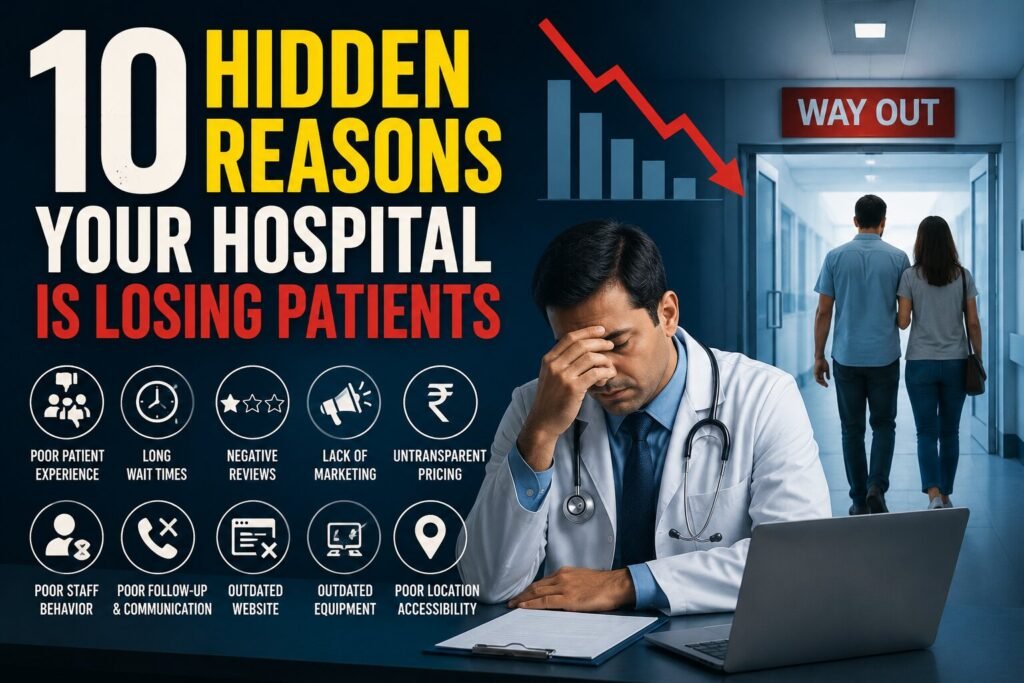
In this blog, you will learn 10 Hidden Reasons Your Hospital Is Losing Patients and find out some effective solutions.
Why Patient Retention Matters
Maintaining the current patients can be a lot cheaper compared to always looking for new patients. Satisfied patients will most likely seek medical help in your hospital in the future, for check-up or any kind of treatment. At the same time, they will help you create a good reputation of your hospital, since they will recommend your services to their friends and family.
When patients do not come back, the effect on your hospital goes beyond one missed appointment. The appointment schedule may show that fewer people are booking appointments, which influences the overall income of the hospital. At the same time, such patients make the reputation of your hospital weaker and thus reduce the number of new patients you can attract. Therefore, hospitals have to increase their marketing budget and spend extra money on advertisements to attract more customers. Moreover, each missed patient means losing on potential future clients.
Knowing the reasons for this problem is an important step in increasing patient satisfaction and creating a good relationship with your patients.
1. Poor First Impressions Online
In the case of most patients, their first experience of your clinic begins way before entering its doorsteps. Your website being out of date, slow in loading or hard to navigate may put questions in their minds regarding the quality of your health care services provided, which ultimately makes them turn to other clinics or hospitals.
It is crucial to have a website that is properly developed if you want to get the trust of the patient. It is important to keep the website updated and make sure that it works well on any device, whether it is a mobile phone, tablet, or computer. The contact information should also be accessible. It is also important to provide them with detailed information about doctors, specialties, treatments offered, and timings of consultations. But above all, give your clients an opportunity to make online appointments easily.
2. Long Waiting Times
Long waiting periods are among the most frequent causes that make patients unhappy with your hospital. Whether it is waiting for an appointment, waiting to be seen by the doctor, waiting for diagnostic tests, or waiting to get the results of such tests, long wait times may cause dissatisfaction and have an adverse impact on the entire patient experience. Although the level of medical care provided by your facility is excellent, long wait times will definitely make patients reluctant to visit it again or recommend it to someone else.
The problem of long wait times may be resolved using good planning and communication. Appointment scheduling system that is capable of providing for a more even distribution of patient visits during the day may help you eliminate excessive waits. Informing patients about estimated wait times via SMS notifications, electronic boards or receptionists is another way to deal with long wait times effectively.
3. Poor Communication
Communication plays an important role in the process of making sure that the patient gains confidence in you as a physician. He must know all the details about his diagnosis, available treatments, cost of treatment, possible consequences, and care he would receive after the treatment. In case the information provided to him is rushed, unclear, and filled with medical terms, the patient gets confused, anxious, and unsure about the treatment he receives.
In order to make communication better, all the staff of your hospital should communicate with the patient in a professional and understandable manner. It is very important for the doctor to listen carefully to the worries of the patient, answer all his questions, and explain all the necessary steps to him in simple language. Writing down all the instructions about his actions, medications, and future recommendations will be also useful for him.
4. Complicated Appointment Booking
The new generation of patients wants that the health care services must be convenient as any other service offered by other organizations. The patients who have to book their appointments by making several calls or who have to wait for a long time and struggle with complicated forms would just stop doing it and move to some other hospital where it would be more convenient for them.
It is crucial to make the appointment process easier for patients as this would help to increase the level of satisfaction of the patients and turn them into customers. Give your patients the option of booking their appointments online and patients can book their appointments at any time through any device. Click to call button would help the visitors to get in touch with the hospital directly and the WhatsApp chat would make it easier for patients to ask any question or book consultations.
5. Negative Online Reviews
Review sites have become some of the most important things in influencing the decision making of patients before visiting a hospital. Many patients visit Google and other review sites before booking appointments just to find out how the patients who visited earlier experienced their visit. Hospitals with many unaddressed negative reviews or few reviews will be seen as less credible despite providing quality health services.
Creating a good reputation online call for constant work. You should always ensure that happy patients leave reviews of their experience online since this will add to the credibility of your hospital. Make sure that you respond to every review that your hospital receives online professionally, respectfully, and in an empathic way because this shows that you value feedback from patients. It is also advisable to fix any problems that the patients have raised if more than one person reports it.
6. Lack of Personalized Patient Care
The loyalty of the patient in question will depend on how he/she feels loved and taken care of and not simply a patient who needs some medical assistance. It will make a huge difference when the history of the patient in question is considered and the post-discharge process will be well handled or when personalized medical services are offered to him/her.
Personalized experience of the patient will be achieved through regular follow-ups and quality care. Regular follow-up messages will be sure to remind the patient that he/she is cared for even beyond the hospital setting. Health reminders in advance about an upcoming appointment or vaccine and check up will surely connect the patient with his/her health care provider. Quality records of the patient will also ensure that the doctor offers informed care whenever the patient visits him.
7. Outdated Technology
Integration of innovative technologies within the healthcare system will bring many advantages to the hospitals in terms of enhanced efficiency and patient experience. For instance, use of electronic medical records will facilitate better access to information about the patient and coordination of care among the healthcare professionals. Online availability of the diagnostic reports will help the patient to review them without visiting the hospital. Digitalizing the billing process will also increase the efficiency of the process and help the patient save their time.
The appointment reminders which can be provided via SMS, emails, and WhatsApp messages will also help to prevent missed appointments. Use of patient portals will also help the patients to avail the additional benefits of booking the appointment, accessing their medical history, downloading the reports, communication with the healthcare professional, and other health management activities.
8. Poor Customer Service
All interactions a patient is going to have with your hospital will add to their overall experience of your hospital. From the initial meeting with your receptionist till the billing, every interaction will make them form an impression about your hospital. Even if you give them the best medical service, how your hospital deals with the matters of coordination, professionalism, communication, and empathy is what decides if they will return or not.
Giving great patient services means that you need to train people working for your hospital all the time and treat patients with importance. People working in your front office and support office should be trained in order to ensure better communication. If you answer the queries of your patient through phone calls, emails, or even any other way, then it shows that you are respecting their time and queries. What is most important is to develop a culture of professionalism and empathy.
9. Limited Patient Education
These are some of the many questions patients ask before they schedule an appointment, during the treatment, and sometimes even after they get back home. Hospitals that offer reliable educational resources not only solve these queries but also empower the patients in making more informed healthcare decisions. It’s the provision of these valuable resources and not just the marketing of your services that will position your hospital as a reliable healthcare guide for your patients.
There’s no denying that creation and continuous updating of educational content is a great approach to winning patient trust and increasing engagement. Publishing health blogs on the most common medical conditions, the ways to prevent them, how to treat them and recover faster makes the patients know more about their health. Having a complete Frequently Asked Questions (FAQs) section solves the most common queries and saves time for your patients. Publishing the interviews with doctors and health awareness campaigns increase your hospital’s reputation due to the presentation of your medical staff’s experience and professionalism.
10. Ignoring Patient Feedback
Feedback from patients is among the best sources for enhancing the quality of the services offered by hospitals. The suggestions, compliments or complaints provide you with information about how patients feel and the aspects that need to be improved at your hospital. There are plenty of opportunities that go wasted because hospitals do not pay attention to patient feedback.
Development of an organized feedback program will help your hospital to address potential issues in time. Conducting regular surveys regarding patient satisfaction will help to get an honest opinion about various aspects of the patient experience starting from scheduling appointments till treatment and its aftermaths. Analysis of the collected information will help your hospital management to detect any repeated issues and work on them. What is more, informing patients of what changes have been done after their feedbacks shows that patients’ opinions really matter for your hospital.
Best Practices for Improving Patient Retention
Do’s
- Deliver consistent patient experiences.
- Make appointment booking simple.
- Maintain transparent communication.
- Keep your website and contact information updated.
- Encourage patient reviews.
- Train staff regularly.
- Follow up after treatment.
- Continuously monitor patient satisfaction.
Don’ts
- Ignore complaints.
- Delay responses to enquiries.
- Allow outdated information to remain online.
- Overcomplicate administrative processes.
- Neglect website maintenance.
- Assume excellent treatment alone guarantees loyalty.
Conclusion
Patients’ attrition does not have to be due to substandard healthcare services. It is, in fact, a result of a number of issues that impact the patient experience, such as communication, convenience, reputation online, customer service, and availability of information.
As far as these factors are known, and are being addressed on a consistent basis, hospitals will definitely improve their relationship with the patients, increase patient satisfaction, and build loyalty. In today’s world, it is imperative for hospitals to offer quality healthcare and quality patient experience.
Call to Action
Are you losing patients from your hospital but don’t know why? Begin by examining all aspects of your patient’s experience – starting with their very first visit to your website all the way through to after treatment has been completed. Overcoming these unknown issues will improve your patient’s satisfaction and retention.
Frequently Asked Questions
1. Why are patients leaving my hospital?
Common reasons include poor communication, long waiting times, outdated digital experiences, negative reviews, and lack of personalized care.
2. How important is the patient experience?
Patient experience is extremely important. Positive experiences increase satisfaction, encourage repeat visits, and generate referrals.
3. Do online reviews affect hospital growth?
Yes. Many patients rely on online reviews before selecting a healthcare provider. Positive reviews improve trust and attract new patients.
4. How can hospitals improve patient retention?
Focus on better communication, convenient appointment booking, excellent customer service, digital accessibility, and regular follow-up care.
5. Should hospitals regularly collect patient feedback?
Absolutely. Patient feedback helps identify service gaps and provides valuable insights for continuous improvement.
Need Help Improving Your Hospital’s Digital Presence?
Get a free consultation with our healthcare marketing experts. Let’s build better patient experiences together.